
Dieser Artikel wird auf Englisch angezeigt, während seine Übersetzung geprüft wird. English →
Lure systems · 2026-07-17 · 9 min read
Structure before lure
A search order built from structure, depth, wind and retrieve angle before lure colour or novelty.
ROCK CURRENT Research Notes
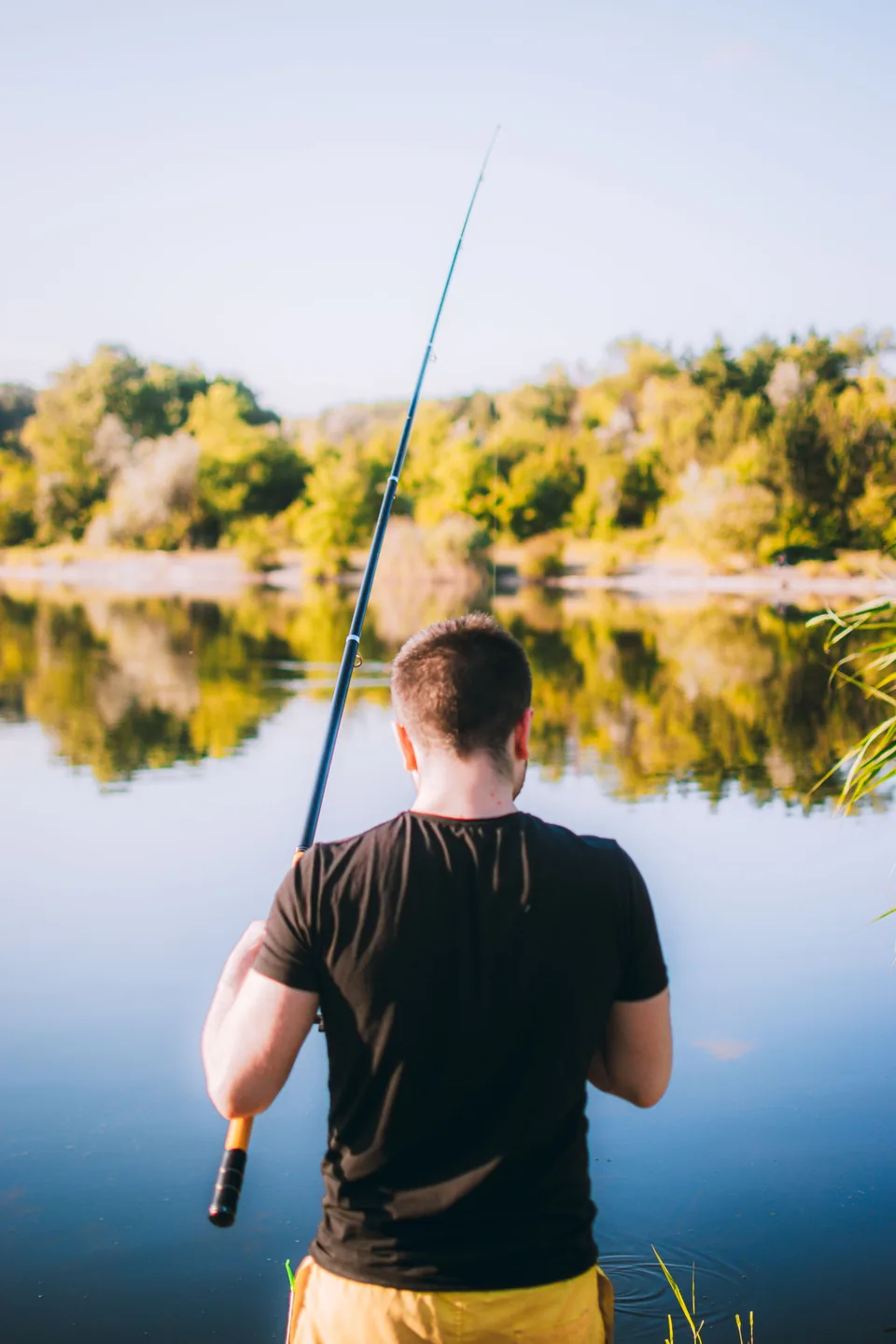 Context photograph · source record retained
Turn open water into a map
A lure shelf can create the feeling that selection begins with the object. On the bank, selection should begin with the water. Structure is any physical change that reorganises depth, current, light, cover or movement: a point, channel edge, weed line, rock transition, timber, wall, inflow or shade line. The most visible object is not always the most useful structure.
Start by drawing a simple map in your head. Mark the shallowest visible edge, the first depth break, any route connecting deep and shallow water, and the side receiving wind or current. This does not identify a fish. It creates a finite set of places and angles to test instead of treating the horizon as one enormous target.
Depth before decoration
A lure that travels above, through or below the useful zone is three different presentations even when the body is identical. Estimate depth from visible contour, bank angle, water clarity and how long the lure takes to contact or leave structure. Treat the estimate as provisional. Reservoir level, current and vegetation can change the effective zone without changing the shoreline silhouette.
Sample depth with an orderly sequence. Begin where contact and control are clearest, then move shallower or deeper in defined steps. Change running depth through weight, line angle, retrieve speed, buoyancy or lure class—but avoid changing every variable at once. If colour, profile, speed and depth all change together, the next cast teaches very little.
Wind changes the useful angle
Wind is not only a casting problem. It moves surface water, concentrates drifting material, changes visibility and can create a repeatable lane along a bank or point. A crosswind may improve one retrieve angle by keeping the lure near an edge, while making another bow the line and pull the lure away from structure.
Choose an angle that lets the lure enter, stay in and leave the target zone intentionally. Parallel retrieves maximise time beside an edge. Perpendicular retrieves cross several depth bands quickly. Diagonal retrieves balance contact time with coverage. None is universally best. Their value depends on the question you are asking of the structure.
Let the lure answer a defined problem
Only after structure, depth and angle are framed does lure selection become precise. Choose buoyancy to control the pause, body shape to create the needed deflection or fall, hook arrangement to suit cover, and mass to reach the zone with useful accuracy. Colour can support visibility or contrast, but it cannot repair a lure that never enters the relevant water.
Build a search order before the first cast. For example: visible edge at mid-depth, adjacent break deeper, windward pocket, then open connection between them. The sequence is illustrative, not a formula. On the water, safety, access, species behaviour and local regulations may change it. Record what each pass actually tested.
Structure before lure is ultimately a way to resist random change. It replaces “What should I buy or tie on?” with “What part of the water have I not yet sampled clearly?” The answer may still require a different lure, but now the change has a reason, a target and a limit.
Run a controlled search
Before tying on, divide the structure into three zones that can be reached safely. Give each zone a starting depth and a retrieve angle. The first pass should favour control over maximum distance, because contact, deflection and line pressure are easier to interpret when the cast is repeatable. Mark where the lure first enters the zone, where it contacts or loses contact, and where the retrieve stops being informative. Those points form a practical map that can be refined without pretending to know the underwater shape exactly.
Change one class of variable at a time. To test depth, keep profile and speed as stable as possible while changing weight, buoyancy or line angle. To test speed, keep the route and running depth comparable. To test profile, return through the same part of the structure. Natural wind shifts and imperfect casts mean no comparison is laboratory-clean, but deliberate control still produces better evidence than random rotation through a box of lures.
End the sequence when the water, access or pressure says to stop—not only when a fish responds. Review which zones were actually covered and which were only imagined. A snag, missed contact or change in line angle can redraw the map, but it should be recorded as an observation rather than a precise measurement. The next location then begins with a smaller, sharper question. In this way the search remains active without becoming hurried, and equipment remains a tool for testing water rather than the centre of the story.